Category: Japanese Culture 日本の文化

  • My current views in English / 英語について

    日本文が後ろに続きます。

    We Japanese know that English is the world’s de facto standard language everyone in the world needs to learn to communicate with each other in this fast-globalising society. Mastering English is, nevertheless, one of the greatest hardships for most of Japanese who were born in Japan and raised by Japanese parents within Japan. They learn English as a mandatory subject in middle school, high school, and even college for up to eight years, but very few of them have a good command of it.

    Quite a few analysts have given comments on why most Japanese are weak in English. Some say it’s because English’s structure of language is quite different from that of the language they usually speak. Others point out the problem with Japan’s English education policies, relying overly on teaching translation techniques from English to Japanese rather than communicative English.

    It is also said that English isn’t necessary for Japanese people’s everyday life. Even if English is taught in school, it’s what they can forget after managing to pass the entrance examination of their highest education facility at long last. Once they finish studying for exams, they can do without English for life as long as they stay within Japan. Rather, showing off English is considered in many cases as rude, affected, and disgusting behaviour by other average Japanese, especially older people who have less chance to learn English.

    Why do average Japanese living in Japan hate such people who speak English fluently, though they may neither feel rude, affected nor disgusting to good painters, professional musicians, skilled karate masters, or those who are good at something other than English? Japan has been subject to America’s control in business, economy, military, culture, and everything else since WWII, and various kinds of things have been brought into Japan. People in Japan have been mesmerised by such American-style things and, because it has been noised about especially for the last 15 years that all examples in America are the global standard they should follow, they have done their best to try to incorporate them in their daily life. However, a few things are what they can’t manage to do it —- English is the one. Affection to what they try to get in vain turns into hatred over time and the hatred will be expressed at those who successfully have it. Due to such nature of Japanese people, most of them don’t or pretend not to speak English well so that they won’t generate unexpected resentment among people. Because it’s considered affected to show off speaking English in public, they have less motivation to use it.

    In my humble opinion, one of the important attitudes to master English is to stop admiring America too much. English is not a language for Americans only, but a lingua franca everybody in the world learns whether or not he is a native English speaker. You’ll find out that American English mainly taught in Japan is not dominant in the world if you travel to countries in Europe, Middle East, or Southeast Asia, where British English is widely used in conversation and signs in public. People in the UK, India, Hong Kong, Singapore, Malaysia, and Australia use their own local English. Even within the United States, you’ll see various kinds of people from businesspersons to hotel clerks, taxi drivers, and newsstand workers who speak in various kinds of accents. Nothing is right, and nothing is wrong. Nothing is fashionable, and nothing is dowdyish. They are all in English.

    We should be a master of English, not a slave of it. We should learn it as not so much one of American cultures as an interface language to get our views over anybody in the world, regardless of his mother tongue, representing the nation we stand. The more Japanese can do it, the more they can influence in the world, resulting in the benefit of our country.

    昨今のグローバル社会、世界のデファクトスタンダード言語である英語をやらなきゃというのはわかっていても、日本で生まれて日本で日本人の親のもとで育った日本人にとって、中学・高校果ては大学まで最大8年勉強しても、マスターするのは至難の業です。

    なぜ日本人は英語が弱いのか、数えきれないほどの専門家が意見を述べています。やれ英語の構造が日本語と全然違うからだとか、英語教育が英文和訳に偏り過ぎていて会話を教えないだとか、そもそも英語は日常生活に必要なくて、入試になんとか合格してしまえば忘れちゃって、日本にいる限り英語なしでも生きていけるからとか。むしろ英語をひけらかすほうが(特に英語を学ぶ機会の少なかった年配者に対しては)無礼で、キザで、ムカツクなどと受け取られちゃったりします。

    英語ができる人に対して鼻持ちならない感情を抱く人がいます。「絵がうまい人」とか「プロのミュージシャン」とか「空手の達人」とか、「何かが得意」という点では同じはずなのに、彼らに対しては嫌悪感を抱かずに、英語ができる人に対してだけ不快感を抱くのも変な話だと思うんですが、戦後ずっと日本はアメリカのコントロールを受け、ビジネス面、経済面、軍事面、文化面すべてにおいてアメリカの影響を受けており、アメリカからいろんな事物が入ってくると日本人はそれに魅了され、特にここ15年ほどはアメリカの事例がすべて「グローバル・スタンダード」で、日本人も身につけるべきと喧伝されているのもあって、アメリカのものをなんとかして手に入れたいと頑張ってきました。とはいっても、頑張っても身につけられないものもいくつかあり、その一つが「英語」で、いくら頑張っても手に入れられないものへの愛情は、しだいに憎しみへと変わっていき、それが、それを簡単に身につけられた者に向けられるんじゃないか、と。そういう日本人の国民性があるので、予期しないところで人から恨みを買うのを避けるために、ほとんどの日本人は英語を話せないか、話せないふりをするようになったんじゃないでしょうか。人前で英語を使うのがキザと取られるのでは、英語を使うモチベーションは下がっていくでしょう。

    私の個人的な考えとしては、英語をマスターするにあたってとるべき態度は「アメリカに過度に憧れるのをやめる」ことじゃないかと思っています。英語はアメリカ人だけの言葉ではなく、世界中の人が、ネイティブであってもそうでなくても、学んでいる「リングア・フランカ」だからです。海外に行くと、日本で主に教えられているアメリカ英語は実は世界的にはそんなに優位ではなく、特にヨーロッパや中東や東南アジアなど、むしろ会話や公共の表示などはイギリス英語のほうが使われていることがわかります。イギリス、インド、香港、シンガポール、マレーシア、オーストラリア……そこの人たちはそれぞれ地元の英語を使ってます。アメリカの中でも、ビジネスマンからホテルのフロント係員、タクシーの運転手、ニューススタンドの店員、いろんな人がいていろんなアクセントで話してるのがわかります。そこには正しいとか間違っているとかはなく、カッコいいとかダサいとかはないんです。みな英語なのです。

    私達は英語の主人であるべきで、英語の奴隷であるべきではありません。英語を学ぶのは、アメリカの文化としてではなく、自分の拠って立つ国を代表して、自分の考えを世界のどの母語の人にも伝えられるようにするためのインタフェースとして学ぶべきと思います。そういう日本人が増えれば、日本人がもっと世界で影響力を発揮することができ、それが日本の国益にもつながるんじゃないでしょうか。
  • Japan’s mobile environment today

    Sorry for not updating the blog for a long time. These days I’m hanging out on Facebook and Twitter, rather than writing blog entries. Please visit my Facebook page at http://www.facebook.com/masayuki.kawagishi or follow @_Yuki_K_ on Twitter 😉

    I see that the world of mobile phones is rapidly changing for years. Nokia, one of the dominant mobile phone manufacturers, is disappearing, and Apple is expanding the market with the iPhone, its flagship mobile phones with a music player, games, and other applications all-in-one. Following apple, various mobile phone manufacturers, from Samsung to small makers in China, are releasing smartphones with the Android operating system developed by Google.

    In Japan, I think that mobile phones are rapidly “globalised” in recent years. A few years ago all you could see here was the “Galapagos” handphones sold only within Japan and unavailable once you brought them out of Japan. But recently on the train or the streets, you see the same devices as those seen in the rest of the world — iPhones, Android smartphones, and even Blackberry phones (scarce though).

    More than that, this month I had good news showing Japan’s globalisation of the mobile phone environment. News says that from 13 July this year you can send text messages (SMS) to the mobile phones of the different carriers from yours. That is normal in the rest of the world, but that isn’t here in Japan — if you have a mobile phone sold by NTT DoCoMo, you can send SMS only to NTT DoCoMo users, not to au, Softbank, or any other carrier’s users. As the SMS gateways are closed to different carriers, you can rarely see here such services as balance enquiry, network configurations, service registrations, and purchasing something by sending text messages to service providers as you can see in Singapore, Hong Kong or some European countries. The opening of the SMS gateways will probably enable you to have such services even in Japan soon.

    Japan and the countries other than Japan don’t stand in the opposite. Japan is an extension of other countries, and any country is an extension of Japan. Anything available in the world must be available in Japan too.

  • Happy New Year 2011 / 2011年明けましておめでとうございます

    LONG LIVE HIS MAJESTY THE EMPEROR AND THE IMPERIAL FAMILY. GOD BLESS OUR NATION AND OUR PEOPLE. MAY THIS YEAR BE HAPPY TO US. THANK YOU.

    2011年(平成23年。皇紀2671年)明けましておめでとうございます。
    皇室の弥栄、国運の隆昌、国民の安寧を祈念いたします。
    本年もよろしくお願い申し上げます。

  • Festivals / 祭りの秋

    Festivals / 祭りの秋

    日本文が後ろに続きます。

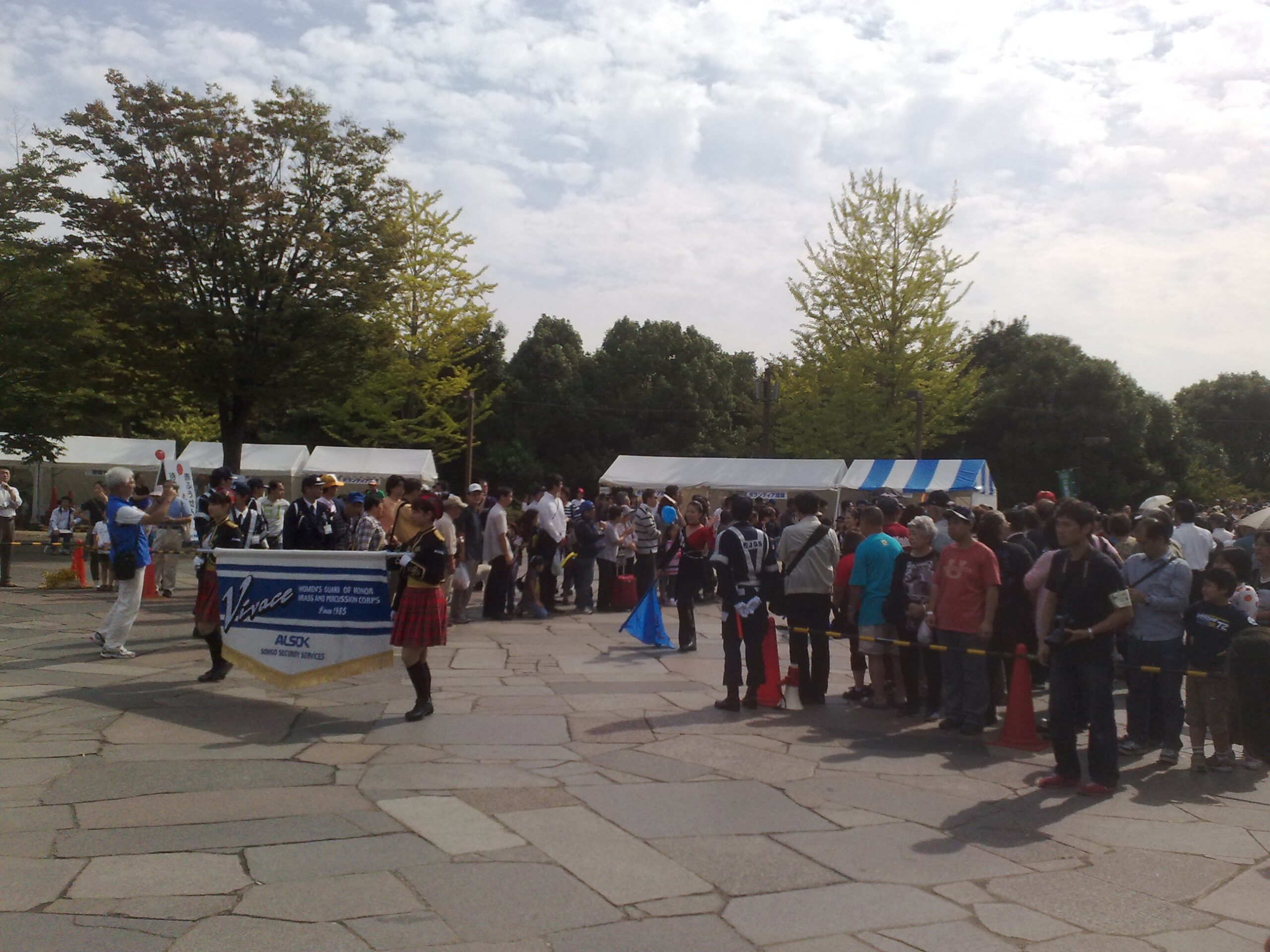
    October is a month of fruits, readings, sports, art, and — more than those — festivals. There were various kinds of festivals in Kiba Park, which was close to my house. The biggest one was the Koto Kumin Matsuri festival from the 16th through the 17th of October.

    10月は食欲の秋、読書の秋、スポーツの秋、芸術の秋といろいろありますが、なんといっても祭りの時期だと思います。近所にある木場公園では毎週いろんなイベントがありましたが、なかでも一番大きいのが10月16日〜17日の江東区民まつりでした。

    Performance by Vivace
    It was the third time for me to see this festival, so there was nothing new in it. Everything was almost the same as usual. All I did there were to eat Indian foods bought from stalls inside the park and to watch a performance by Vivace, a marching band consisting of only female employees of ALSOK, a Japanese security company.

    In the same days, there was a festival by the students of the University of the Sacred Heart, which had been built in the former residence of Empress Dowager Nagako, the previous Emperor Hirohito’s wife. This university is for women only, so it’s usually closed to people other than the students of it, except on special days like the festival. I wanted to get inside the university because I wanted to see the historical houses inside, such as the former house of Nagako and the chapel of the university. During the festival, the university was open to the public, so it was one of the perfect chances to see them, which wouldn’t come so many times.

    After seeing the Koto Kumin Matsuri, I went to Hiroo to see the festival of the University of the Sacred Heart called Seishinsai. I took the subway to Shibuya and there I took a bus to Japan Red Cross Medical Center, where I got off the bus, and I had a gate of the university. After the ID check at the gate, I got inside and walked along the path for several minutes then I had the Palace, the former house of the Prince Kuninomiya, where his daughter Nagako had been raised and lived until she had married the previous Emperor Hirohito.

    江東区民まつりを見るのも3回目なので特に目新しいものはありませんでしたが、屋台でインド料理を食べ、ALSOKの女子儀仗隊「Vivace」の演奏を楽しんできました。

    ところで同じ日に、広尾の聖心女子大学で「聖心祭」という学園祭がありました。ここの大学は旧久邇宮家の邸宅の跡地に建てられていて、香淳皇后が昭和天皇とのご成婚までの間、ここに住まわれていた場所にあります。女子大なので当然、普段は一般人はシャットアウトなんですが、聖心祭の期間中は一般人にも開放されています。ということで、久邇宮邸やクニハウスなどの歴史的建造物を見てみたかったので、聖心祭期間は絶好のチャンスというわけです。

    ということで、江東区民まつりのあと、広尾に行ってきました。渋谷から日赤医療センター行きのバスに乗り、終点で降りると、すぐに大学の門が見えてきます。入口でIDチェックをすませ、中の小径を数分歩くと、「パレス」とよばれる久邇宮邸がありました。香淳皇后がご成婚までここに住まわれていた場所です。

    The Palace
    The Palace The Palace
    The Palace パレス

    The Kuni House
    The Kuni House, the site of the main entrance of the Palace, where Empress Nagako departed to the Imperial Palace at her wedding.

    クニハウス。久邇宮邸の正面玄関跡です。ご成婚に際して、ここから宮城へご出立あらせられました。

    The Marian Hall
    The Marian Hall, an auditorium of USH. The Latin phrase on the top made me feel it was gorgeous.
    マリアンホール、講堂です。上のラテン語がゴージャス感いっぱいです。

    The Chapel
    The chapel, used daily for masses and prayers. An alumna of USH can use it for her wedding.
    チャペル。ミサや礼拝など日常的に使われており、卒業生はここで結婚式をあげることもできます。

    Interior of the Chapel
    The interior of the chapel, where the student choir practised singing. I heard their sounds reflected in multiple directions on the round ceiling and resonated fantastically. I admired its gimmick of construction for helping Catholics feel God’s Power.

    Besides, there was an open-air stage, stalls selling foods and goods, and many kinds of events and amusements during the festival, but I left in haste because there were such young and bright boys and girls that a middle-aged man like me couldn’t stay any longer 🙂

    チャペル内部。学生の聖歌隊が練習してました。丸い天井で音が反響して神秘的に響くように工夫されてつくられているのに感心しました。

    それ以外にも露天ステージやら模擬店やらその他もろもろお楽しみイベントがいっぱいでしたが、若くてまぶしい男女がいっぱいいて、オジサンとしてはいたたまれなくなったので早々に退散しました。。。

  • かなまら祭り

    A man on the cannon

    あなたは18歳以上ですか?
    YES     NO

    (more…)

  • How can I pray for getting such a big one?

    A man on the cannon
    First of all, I’d like to ask you if you are of AGE 18 OR UP? If so, you can continue reading. Otherwise, please leave.

    (more…)

  • 節分です

    The eho-maki roll
    今年も恵方巻き買ってきました~♪
    今年の恵方は東北東。。。幸せ来るといいな。

  • 清澄庭園にて

    連休の谷間で良い天気だったので、家の近所にある清澄庭園にお散歩してきました。いやー癒されますね。

    Kiyosumi Garden

    そのほかの写真はFlickrにアップしてます。

  • Kiyosumi Garden

    Today I went for a walk to Kiyosumi Garden, within a 15-minute walk from my house, because it was a sunny Japanese Thanksgiving Day and I wanted to get out of my house.

    These are photos. They make me feel at ease.

    Kiyosumi Garden

    The rest are uploaded on Flickr.